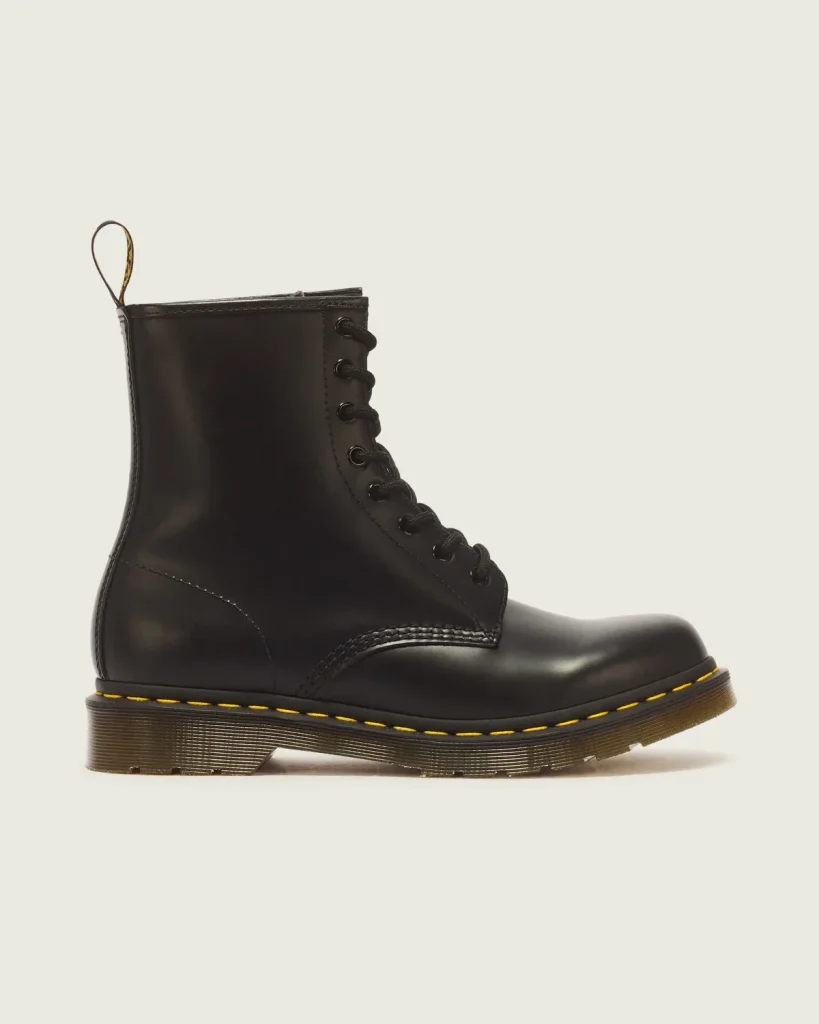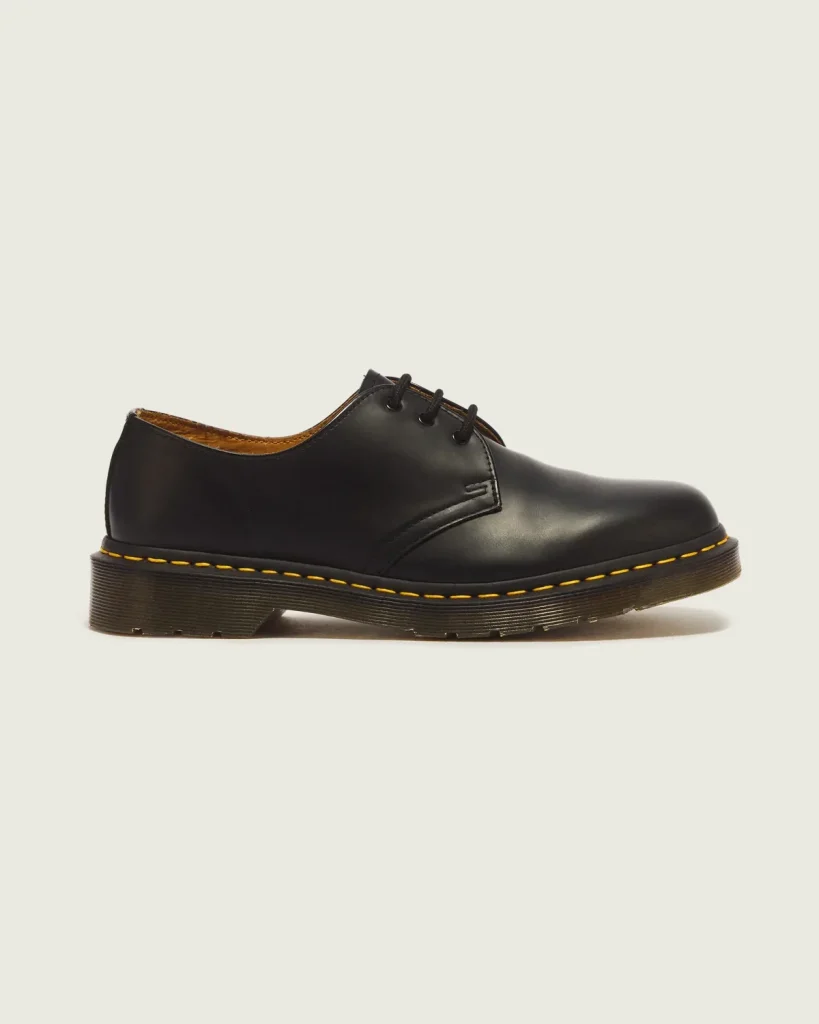
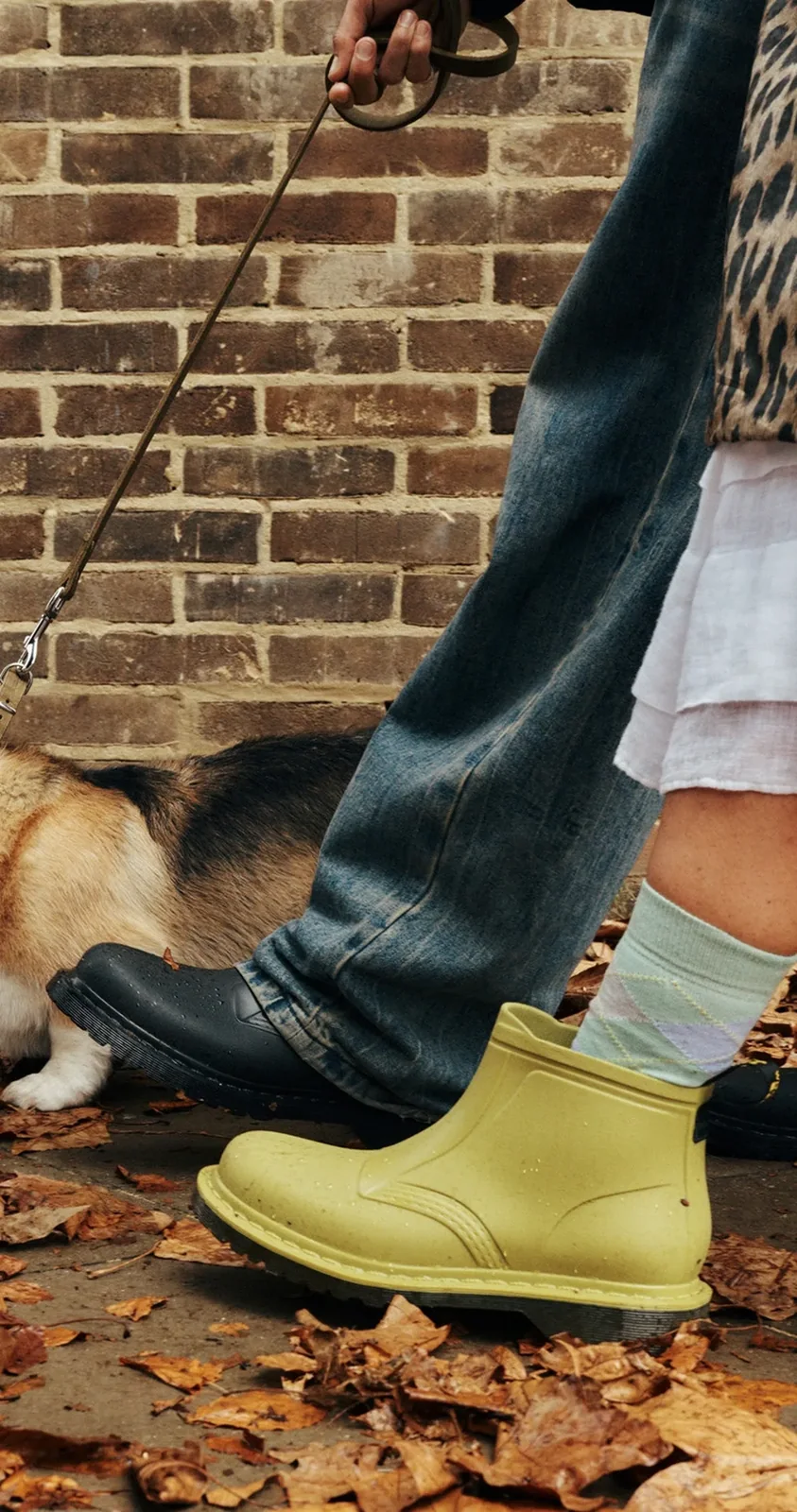
Check the pair's limits
Water resistance varies by material, seams and construction. A heavy-looking boot is not proof of waterproofing. Read the product information for the actual pair; for prolonged rain or standing water, choose footwear expressly suited to those conditions.
Look underneath before leaving
Remove stones and mud from the tread and inspect it for worn areas. Grip depends on the sole, wear and surface; no everyday shoe removes the need for care on wet tiles, leaves or metal covers. Shorten your pace and use handrails where available.
Use protection selectively
A protective treatment may be suitable for some uppers, but can alter colour or finish and does not make every shoe waterproof. Check compatibility, test a hidden area and follow the product's ventilation and drying directions before wearing the pair outside.
Remove dirt when you return
Brush off loose dirt when appropriate for the material. Wipe compatible finished uppers gently with a barely damp cloth; avoid soaking the shoe to remove a small mark. Attend to muddy edges and soles separately so grit does not spread over the upper.
Dry without added heat
Open fastenings, remove removable insoles if their care instructions allow it, and let air circulate. Lightly fill with clean unprinted paper and replace it when damp. Keep the pair away from radiators and hairdryers; allow it to dry fully before wearing again.
Deal with marks carefully
Rain and road residue can leave rings or pale deposits. Use the gentlest cleaning method approved for the material and test any new product first. Avoid household mixtures or hard scrubbing on an unknown finish; persistent marks are a reason to seek specialist care advice.
Wear what works for you. Make the story your own.