Understand the entry
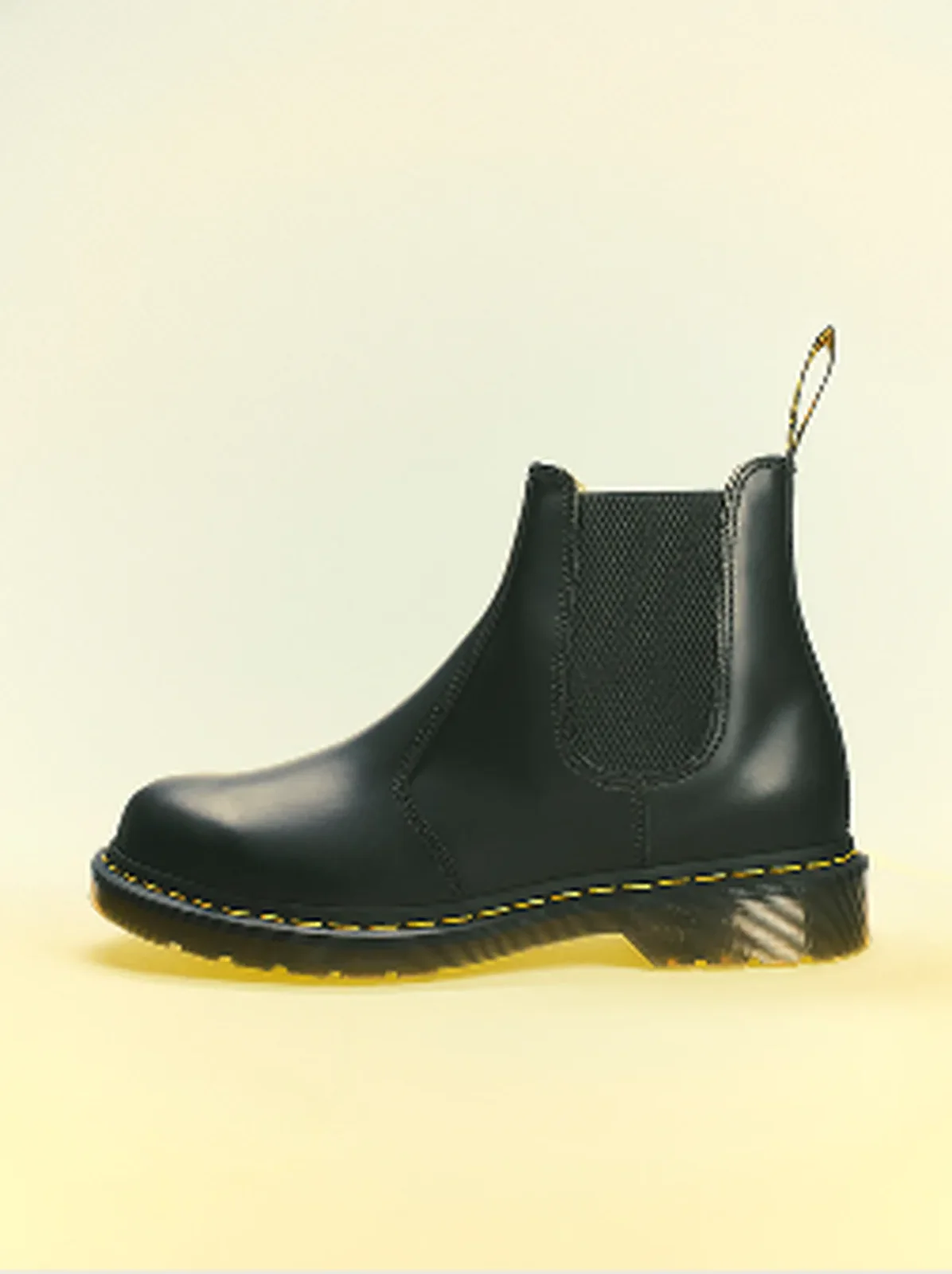
The elastic panels and opening govern how easily a Chelsea boot goes on. Sit down, use the pull tab gently if one is provided and avoid folding the heel under your foot. If entry needs excessive force, compare another size or shape rather than stretching it by force.
Check more than standing fit
Once both boots are on, walk and turn with your usual socks. Check toe space, pressure across the instep and how the heel moves. A boot can feel roomy at the toe and still press over the foot; judge the whole fit instead of sizing down only to reduce movement.
Inspect the elastic panels
The panels should sit without digging into the ankle or remaining visibly distorted. Notice how the opening meets your leg when you bend or sit. Panel dimensions and shaft shapes vary, so use the actual pair rather than a size number as your guide.
Choose where the hem lands
A narrow trouser hem can sit just above the shaft; a wider one can fall over it. Avoid wedging thick fabric tightly inside the opening. Take a few steps and sit down to check whether the hem catches on the boot and stays caught when you stand.
Work with socks and layers
A sock that extends beyond the boot edge can prevent bare skin meeting the top seam. Choose its thickness during the fitting, since adding a thick pair later changes the space inside. With a skirt, repeat one colour between socks and clothing for a simple link.
Protect the opening in care
Loosen your foot out with your hands instead of using the other boot to scrape the heel. Remove dirt from seams with a soft brush, then use care appropriate to the upper. Keep leather treatments off elastic unless the product instructions explicitly allow contact.
Wear what works for you. Make the story your own.