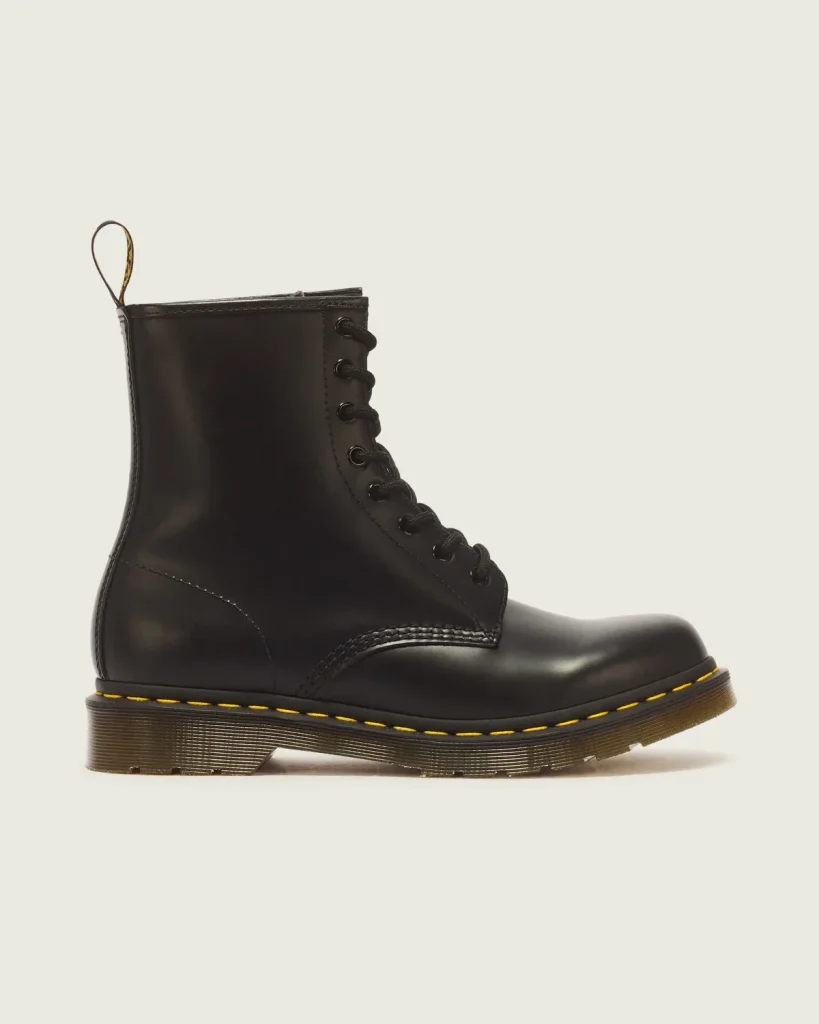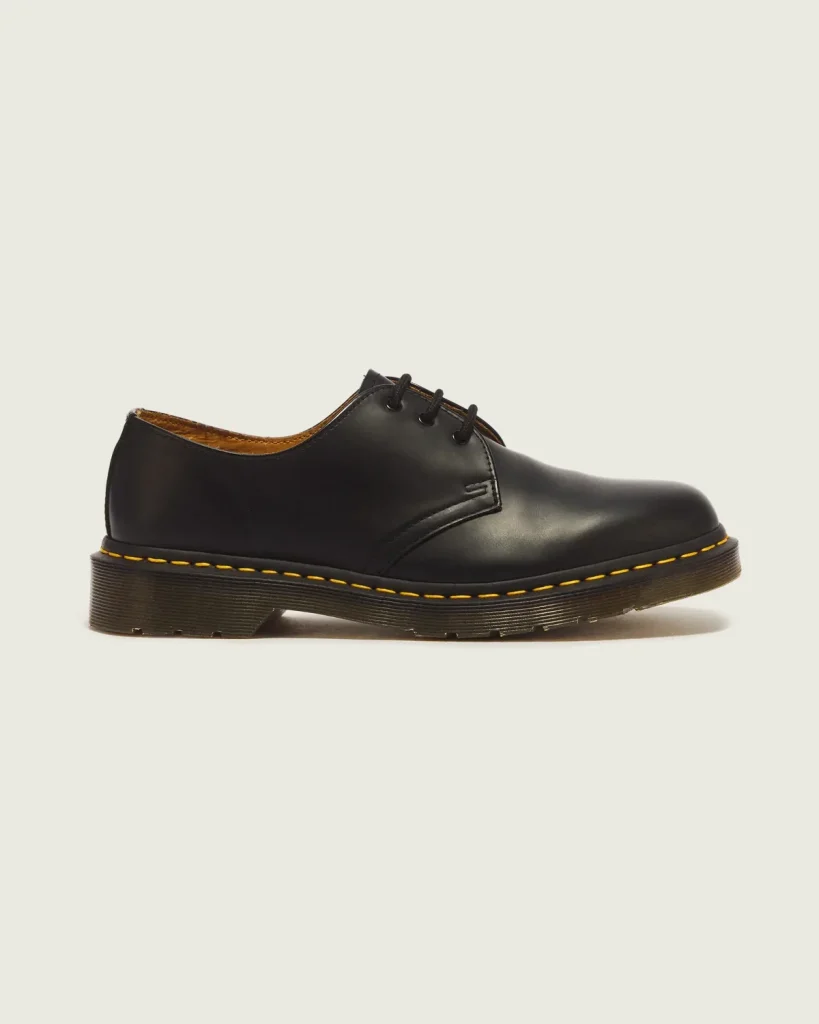
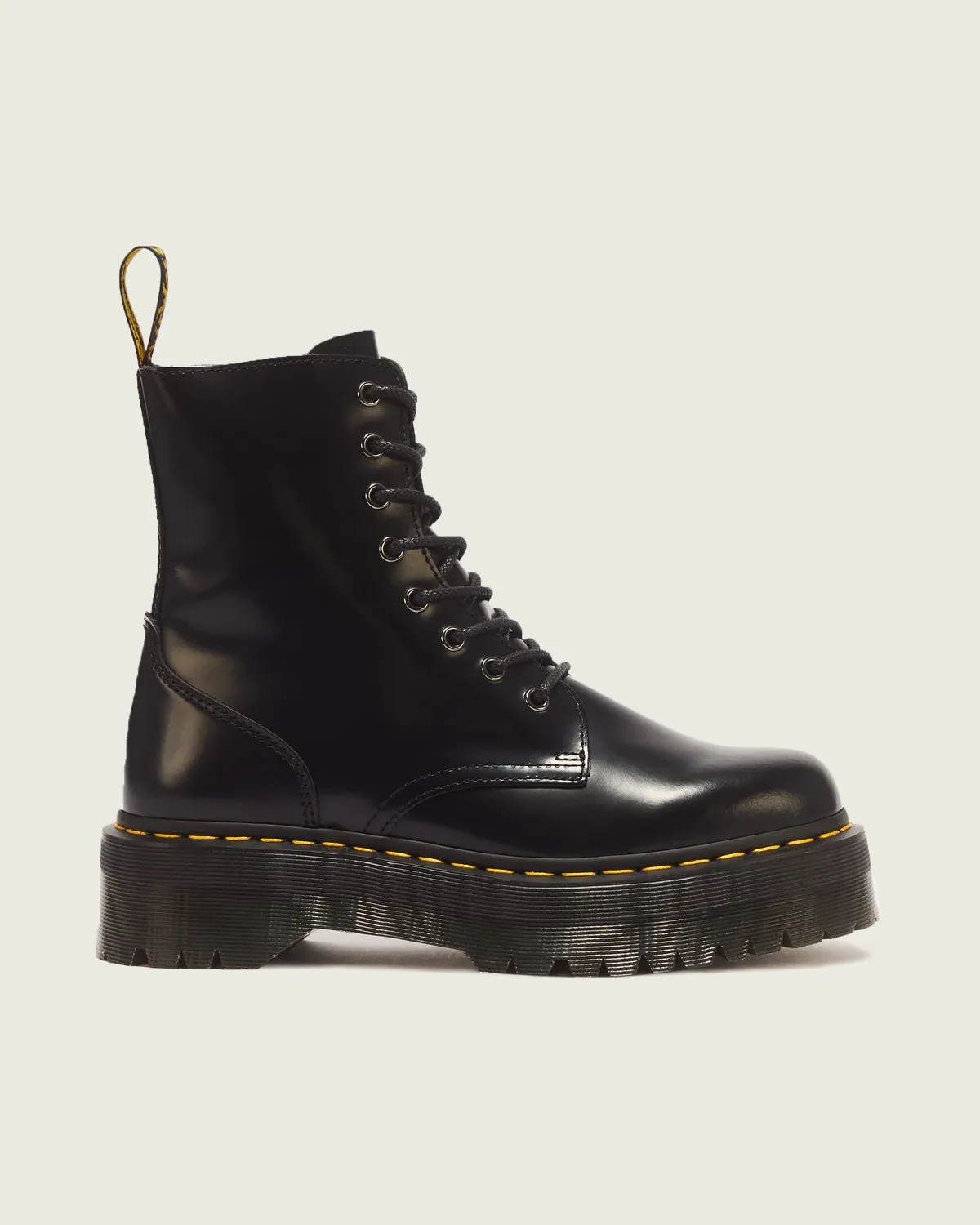
Read the whole sole
Compare the thickness at the heel and forefoot, the tread and how the sole bends as you walk. A tall-looking platform does not tell you how stable or comfortable it will feel. Try the actual pair on level ground before deciding how it fits your routine.
Practise ordinary movements
In a safe indoor space, walk, turn slowly and try a low step with a handrail nearby. Notice the extra height when judging kerbs and door thresholds. Stop if the boot feels hard to control; an outing is a poor place to discover that the sole changes your stride.
Keep hems off the ground
Check long trousers while standing and walking, since the extra sole height can disguise an overlong hem. A wide leg can frame the boot well if it clears the floor. Avoid letting the back of the trouser leg slip beneath the heel on stairs or escalators.
Balance one strong proportion
Try a straight coat, a simple skirt or a clean trouser shape before adding more volume. The aim is to see how the broad sole relates to the outfit. Photograph the whole silhouette from a normal standing height if a mirror crops out the footwear.
Secure the upper carefully
Set the lacing or fastening so the foot feels held without painful pressure. Extra sock thickness cannot reliably fix a loose boot. Check that long lace ends, loose straps and garment ties cannot catch near the sole or wrap around the opposite foot.
Check wear before leaving
Look for tread worn smooth, loose fastening parts or separation between upper and sole. Platforms are not automatically suitable for wet or uneven ground; consult the actual product information and conditions. If the boot needs repair, have it assessed before another long walk.
Wear what works for you. Make the story your own.