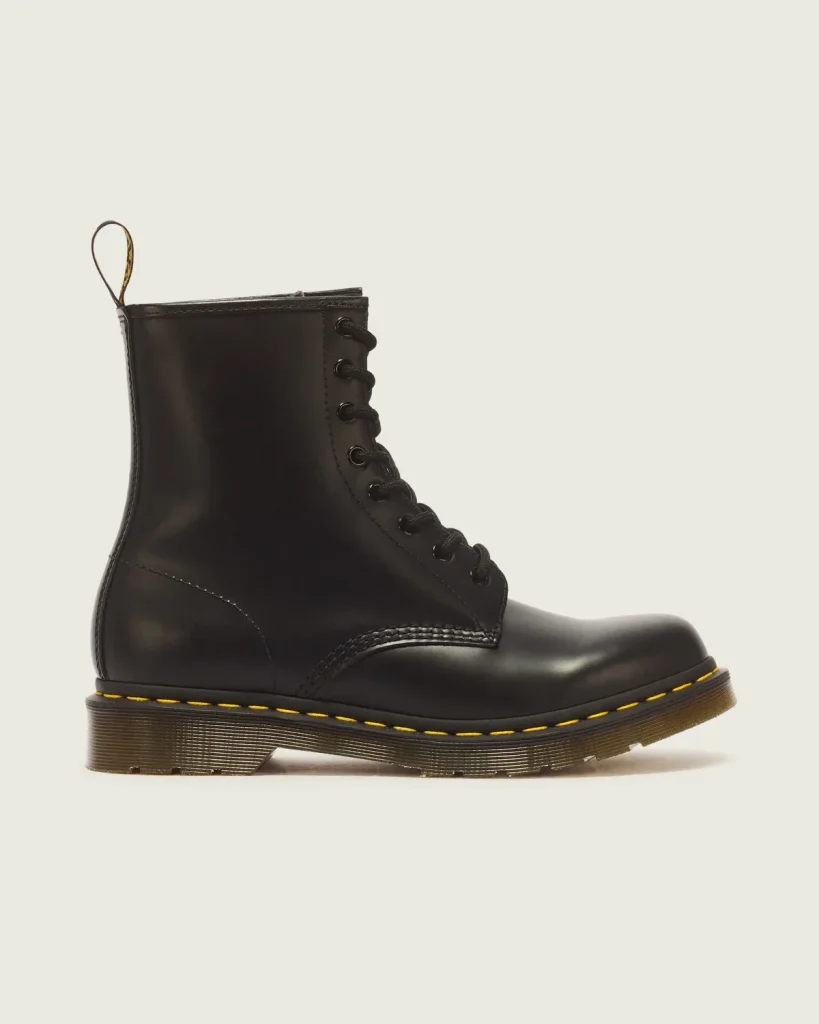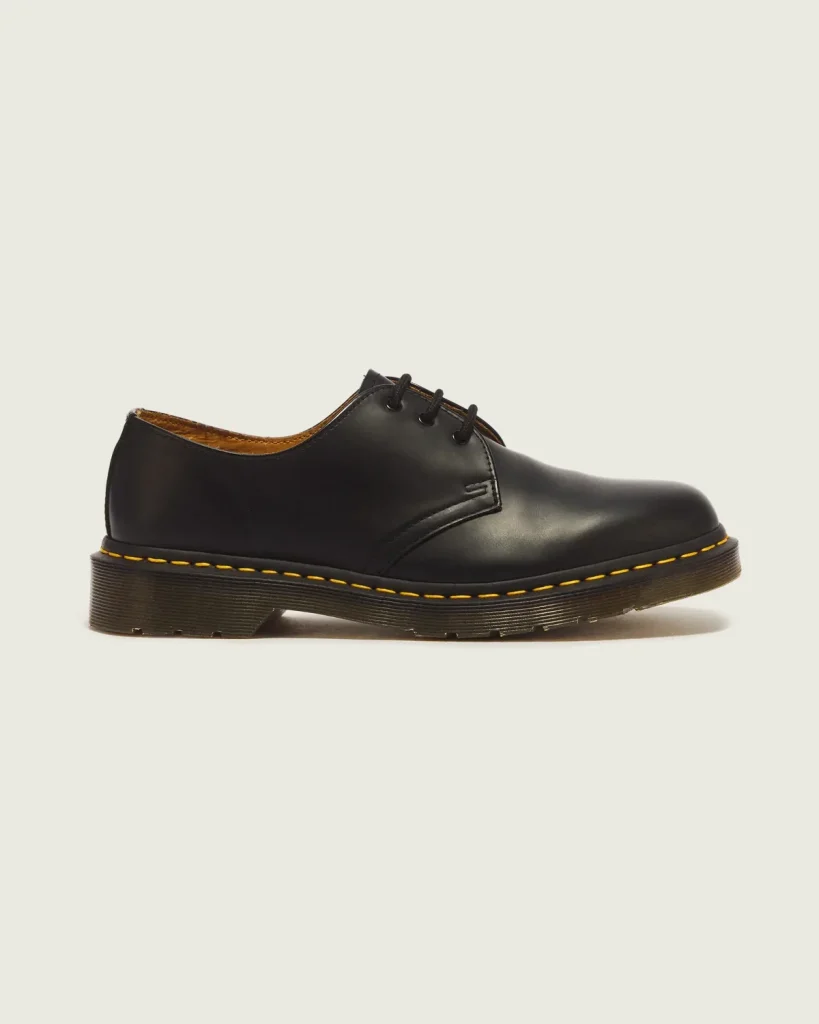
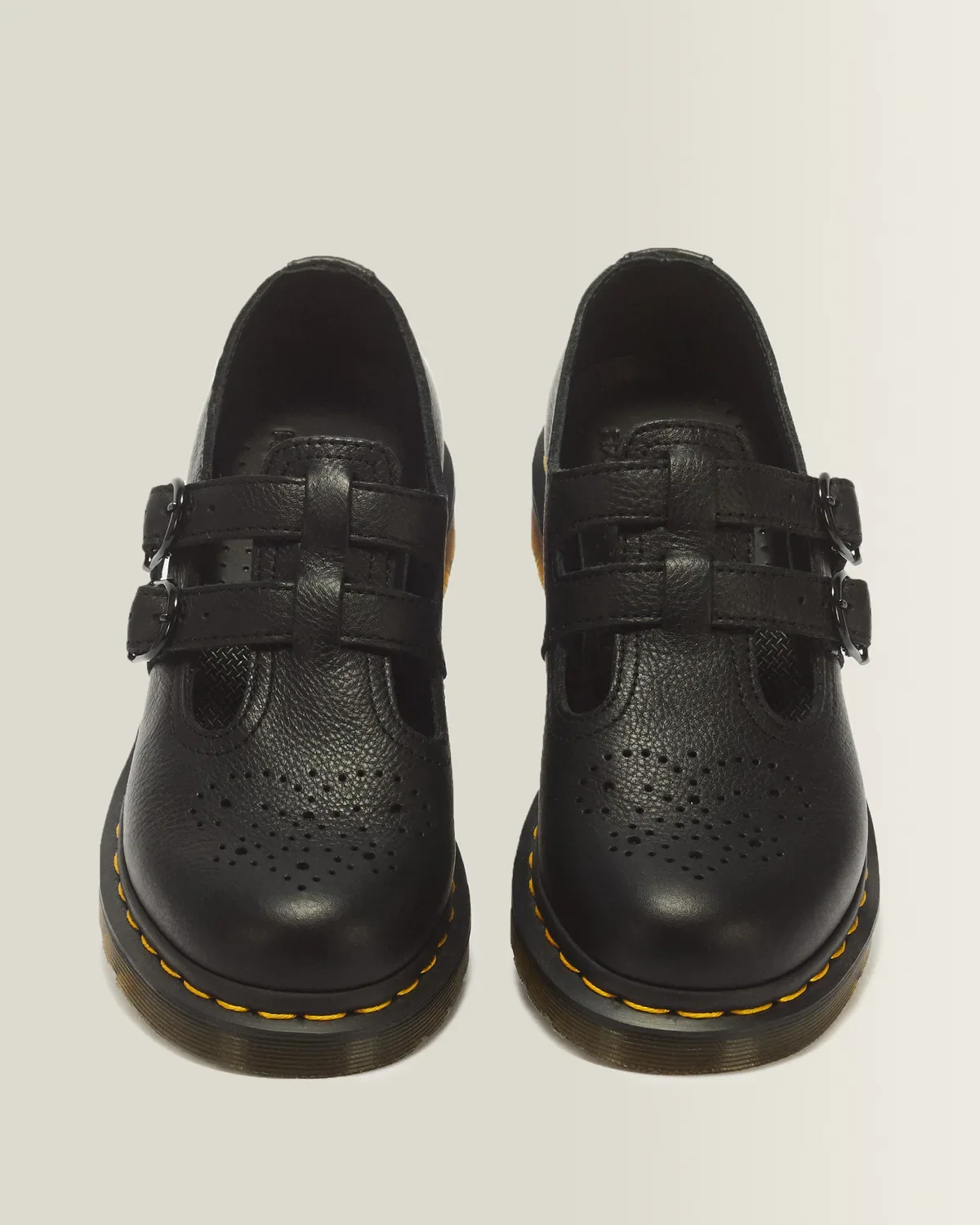
Look at where the strap sits
A strap near the ankle feels different from one across the instep, and some pairs have several. Try the actual design with your foot flat and then in motion. The fastening should close securely without the edge digging in when your foot bends.
Check the shoe before the strap
Start with toe space and heel shape, then adjust the fastening. A very tight strap should not be needed to rescue an oversized shoe. Walk and turn in both shoes; pressure on the toes, persistent slipping or rubbing calls for another fit trial.
Try socks as part of fitting
Choose the thickness you plan to wear most. A ribbed sock can change both the appearance and the space beneath the strap, while a thin sock gives a different fit. Smooth any wrinkles before fastening and check that seams do not gather at pressure points.
Choose the hem around the line
A cropped trouser reveals the strap; a wider, longer leg lets it appear as you move. With skirts, compare the shoe with several hemlines while standing normally. Keep hems and loose ties away from the buckle so they do not snag as you walk.
Use the fastening gently
Undo the buckle or closure before putting the shoe on and taking it off. Pulling a closed shoe over the heel can strain the strap or crush the back. Check holes, stitching and fastening parts periodically, and stop using a closure that no longer holds securely.
Clean around small details
Brush grit away from the strap joins and remove surface dirt with a method suited to the upper. Test any product in a hidden area and keep it off decorative parts unless allowed. Let damp shoes dry naturally, with straps open and away from direct heat.
Wear what works for you. Make the story your own.